
Mehendi Outfits
Warm yellows, lighter hand, easy drapes for an afternoon of henna.
The mehendi is an afternoon spent mostly sitting down, with wet henna drying on both hands — which is a design brief, whether anyone says it out loud or not. Mehendi outfits at the atelier are the lightest garments we make: easy sleeves, nothing that needs adjusting, nothing that can smudge a line of henna.
The palette leans warm and bright — lime greens, blush pinks, marigold yellows, hand-printed florals on chiffon and light silk. Peplum kurtas over wide-leg pants, printed maxis, soft lehengas with crop blouses: dressed-up ease, photographed beautifully, comfortable for six hours.
Like everything from the house, each piece is made to measure — and because the hand-work is lighter, mehendi pieces are among the quickest commissions on the wedding calendar.
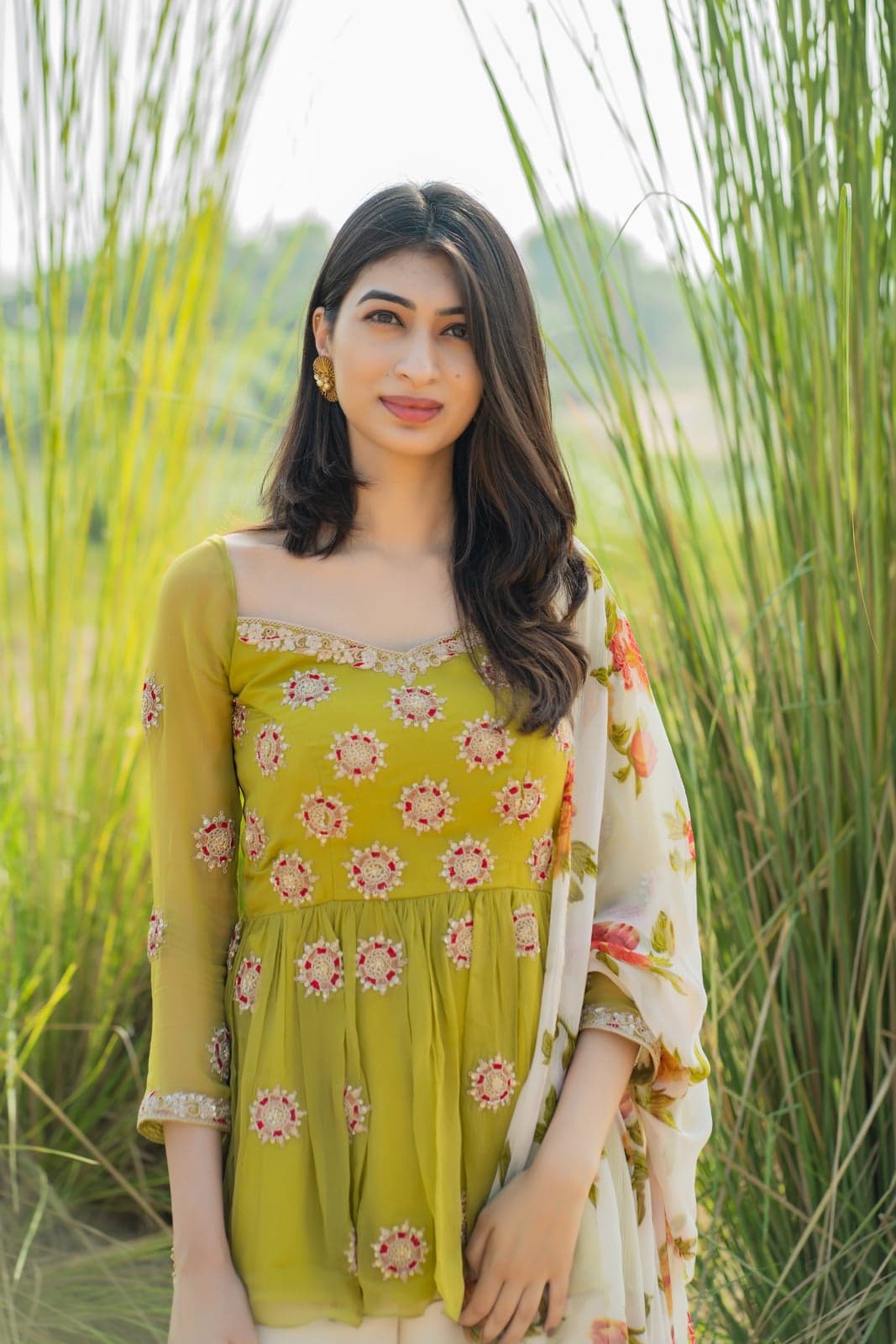
Lime green peplum tunic with circular hand-set bead motifs over a floral printed wide-leg pant — close portrait in a sunlit field of pampas grass.
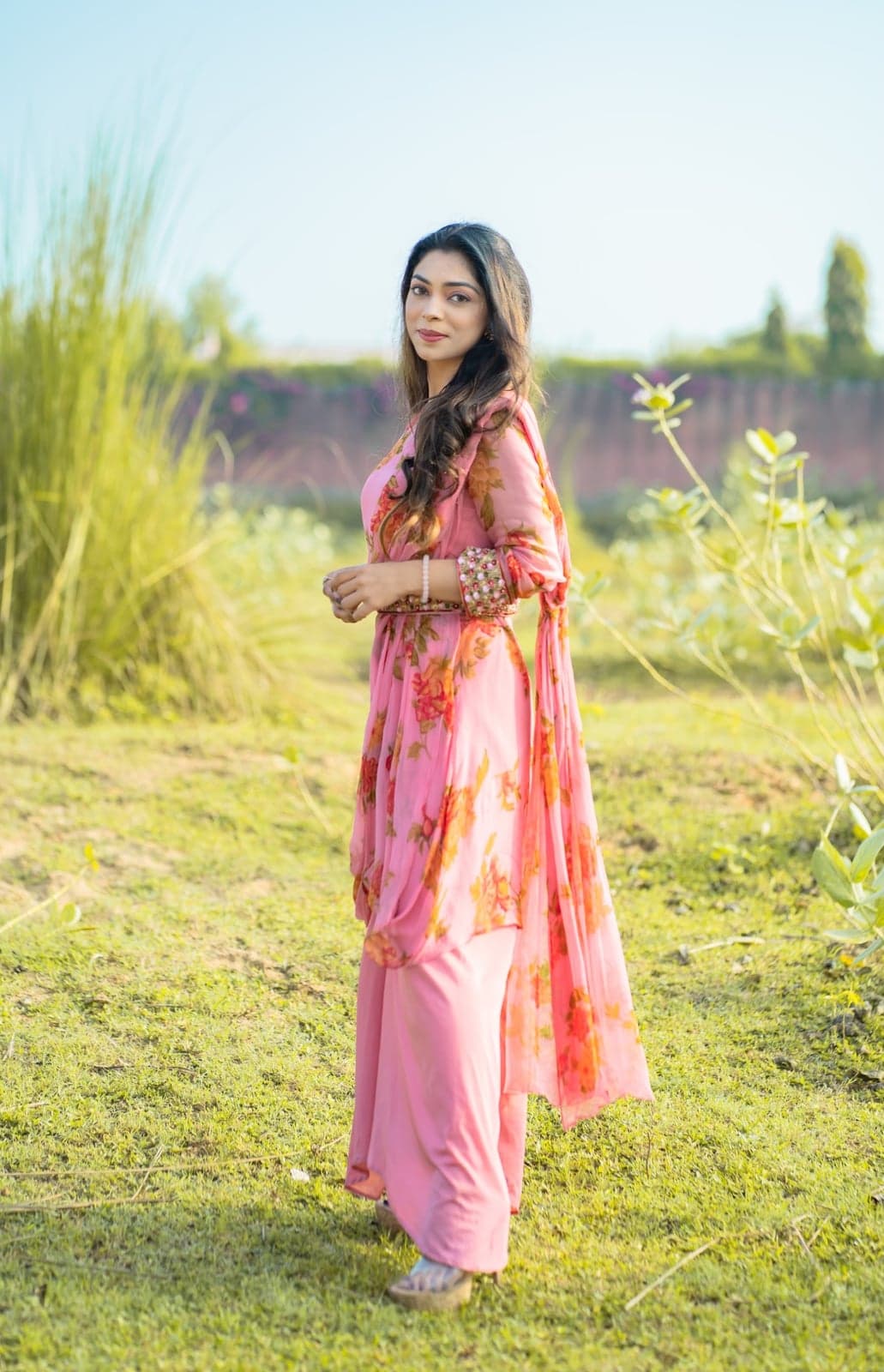
Pink chiffon kurta with orange rose-print balloon sleeves and matching dupatta — outdoor portrait beside tall grass tufts.
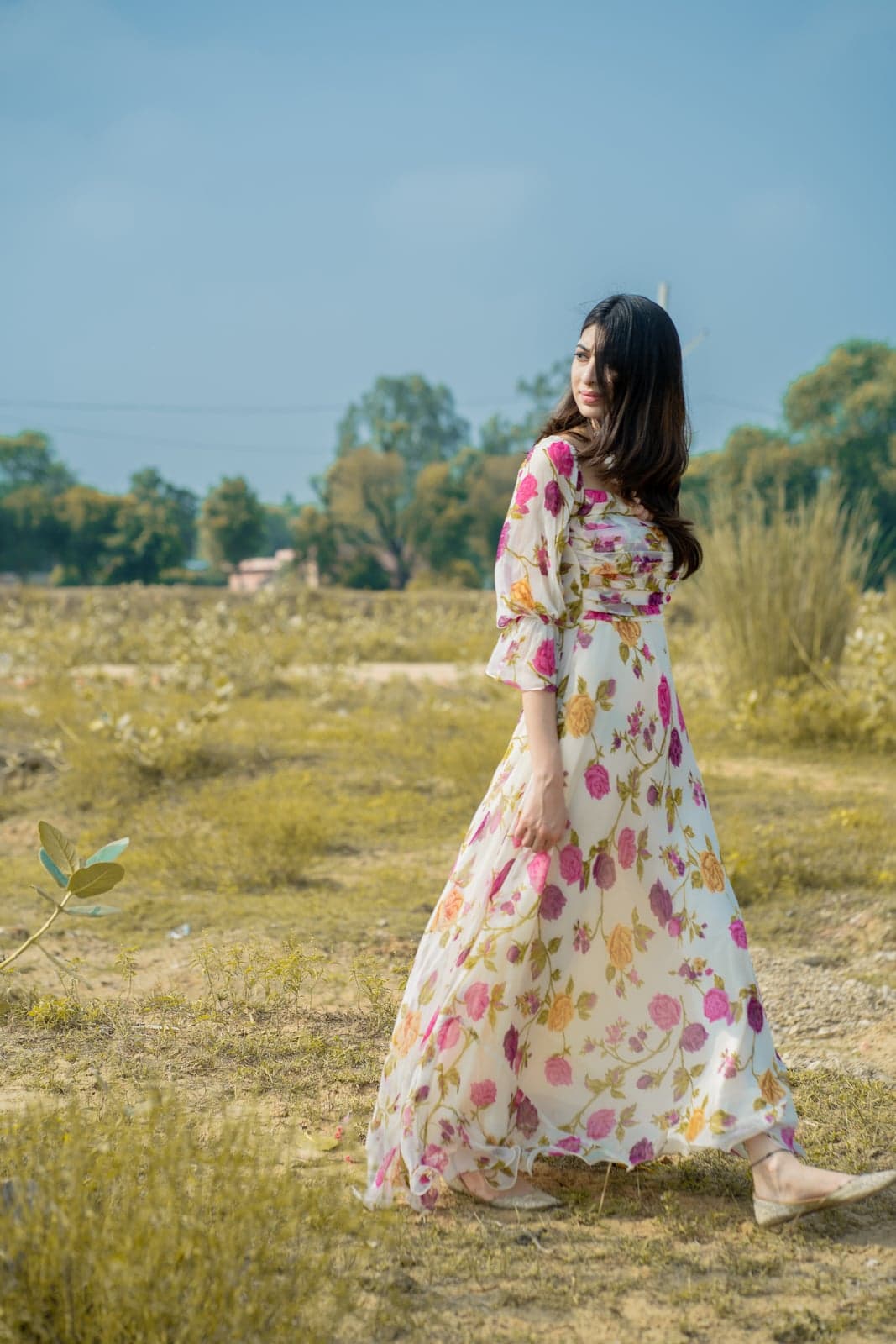
Ivory and pink rose-print chiffon maxi with a cinched waist and balloon sleeves — outdoor portrait in a sunlit clearing.
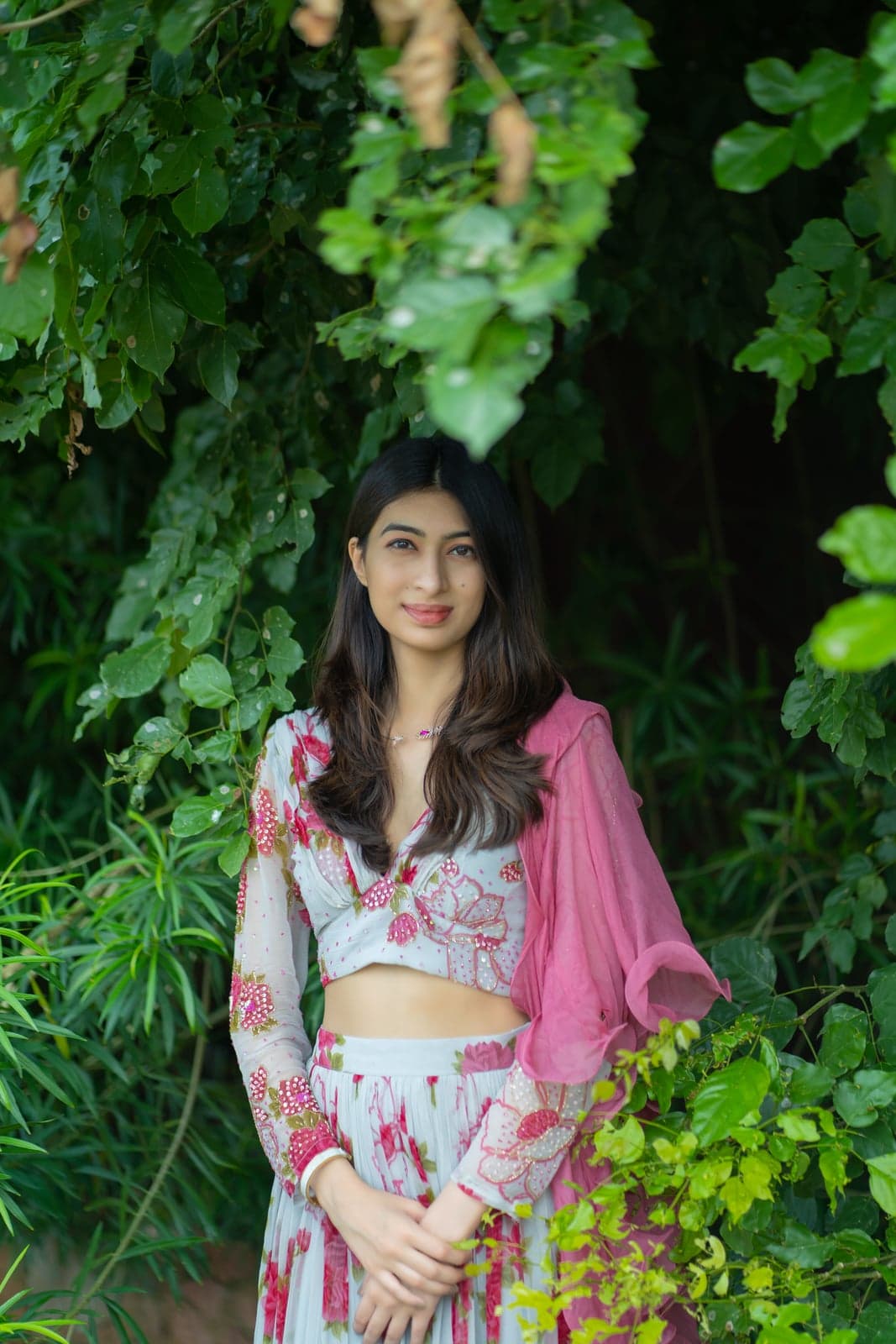
Cream berry-print lehenga and crop set on Jaipur temple steps — pink chiffon dupatta caught in motion above the sandstone tiers.
Questions, answered.
- What should a bride wear for her mehendi?
- Something light, bright, and forgiving of five hours of sitting: a peplum kurta with wide-leg pants, a printed maxi, or a soft lehenga with an easy blouse. Sleeves matter — fitted cuffs fight with drying henna, so we cut sleeves loose, short, or balloon-shaped.
- Which colours work best for a mehendi outfit?
- The greens and yellows traditionally associated with the ceremony photograph wonderfully against henna and marigolds, but there is no rule. Blush pinks, corals, and ivory florals are just as at home. We choose against your venue and the rest of your wedding palette.
- How quickly can a mehendi outfit be made?
- Four to eight weeks, as the hand-work is lighter than bridal or sangeet pieces. Mehendi outfits commissioned as part of a trousseau are scheduled around the bridal lehenga's fittings.
- Can the mehendi outfit be re-worn afterwards?
- That is half the point of making it well. A peplum set or printed maxi from the mehendi becomes day-wedding and festive wear for years — we cut them as real garments, not single-use costumes.