
Sangeet Outfits
Movement-first embroidery — for the dance floor and the family portrait.
The sangeet is the one night of the wedding built entirely around movement, so every sangeet outfit at the atelier is cut with the dance floor in mind. Skirts that open when you turn. Embroidery placed where it catches stage light. Nothing that needs holding up, pinning down, or worrying about.
Shararas and ghararas do most of the work here — wide-legged, fluid, secure — alongside printed lehengas with lighter hand-work than their bridal cousins. Tie-dyed chiffons, hand-set sequins, magenta and olive and blush: the palette is freer than the wedding morning's, and so is the mood.
Commissioned pieces are fitted twice — once standing still, once moving — because a sangeet outfit that only works standing still doesn't work.
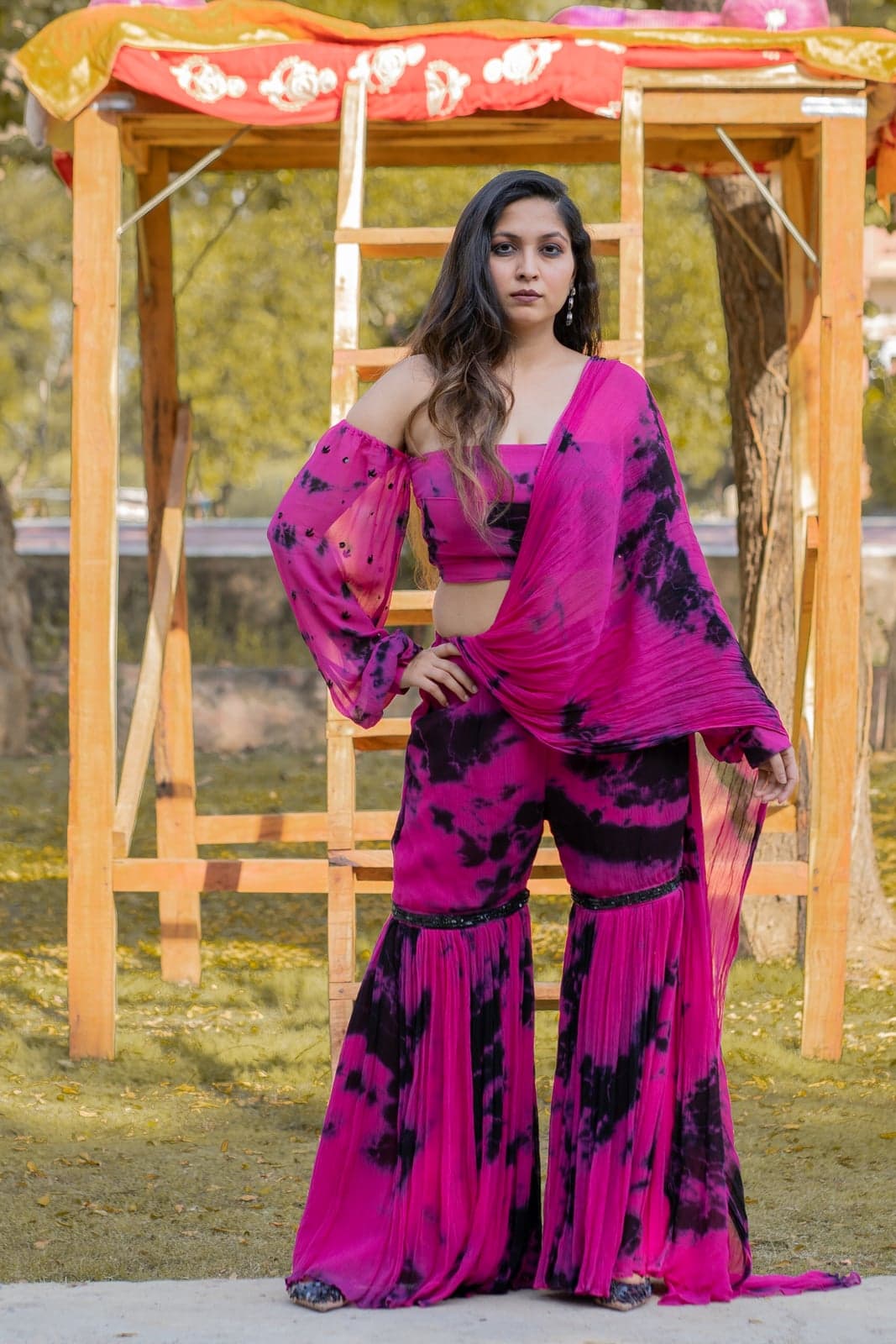
Magenta and black tie-dye chiffon gharara with an off-shoulder balloon-sleeve crop top and pleated wide-leg pants — photographed under a marigold-draped canopy.
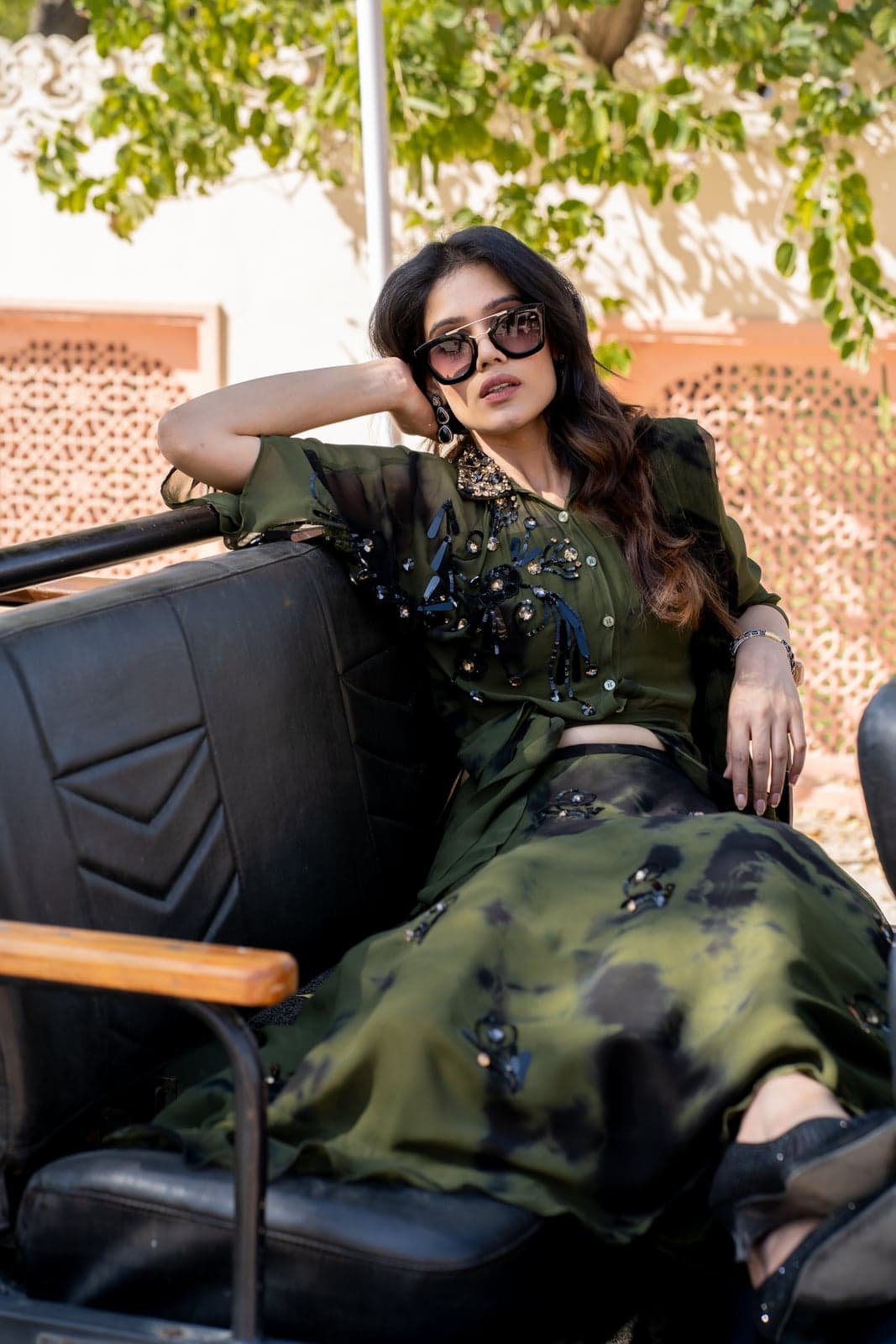
Olive green sharara with hand-set sequin and bead embroidery on the bodice, paired with a black-and-green dyed drape skirt — photographed against the jaali screens of a Jaipur courtyard.
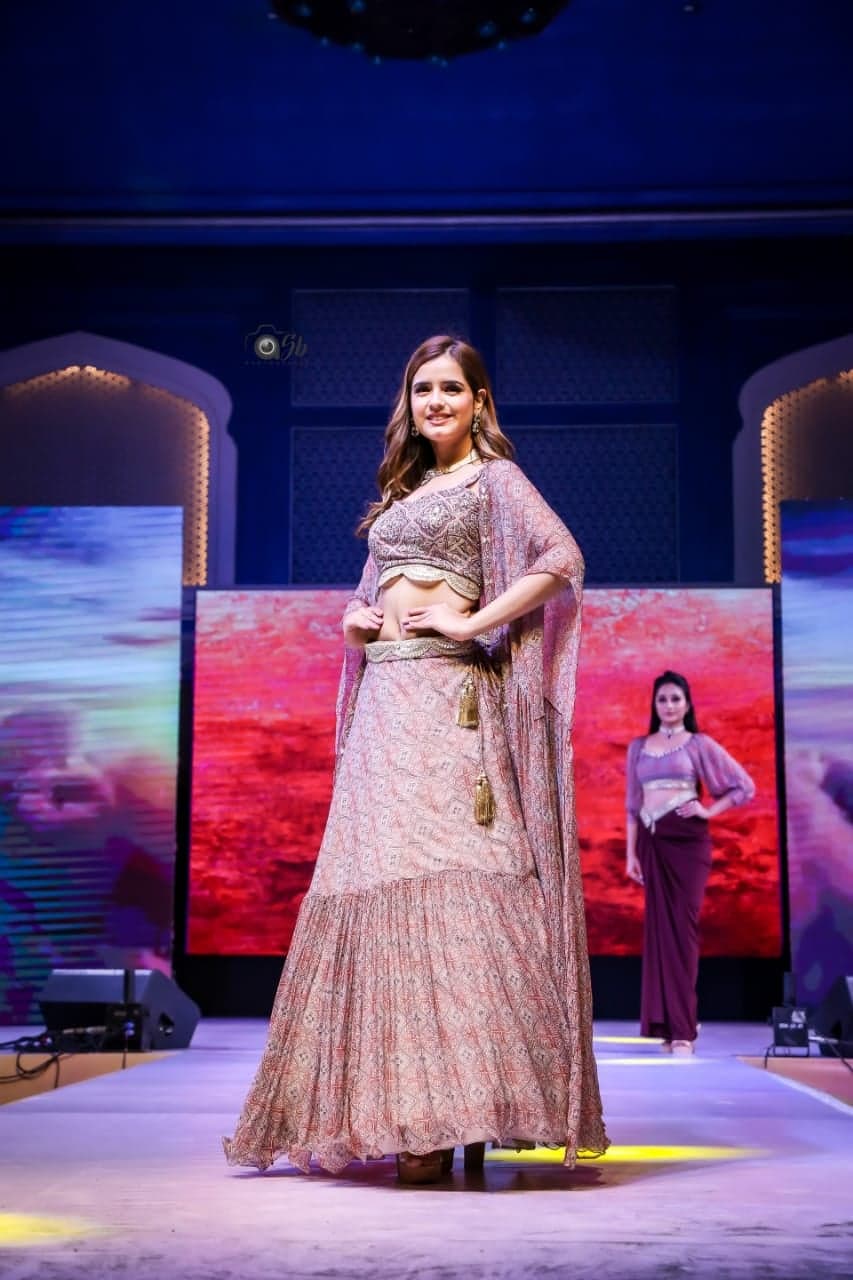
Blush peach printed lehenga with an embellished crop blouse and a sheer printed cape — runway portrait against the red-and-blue sunset backdrop.
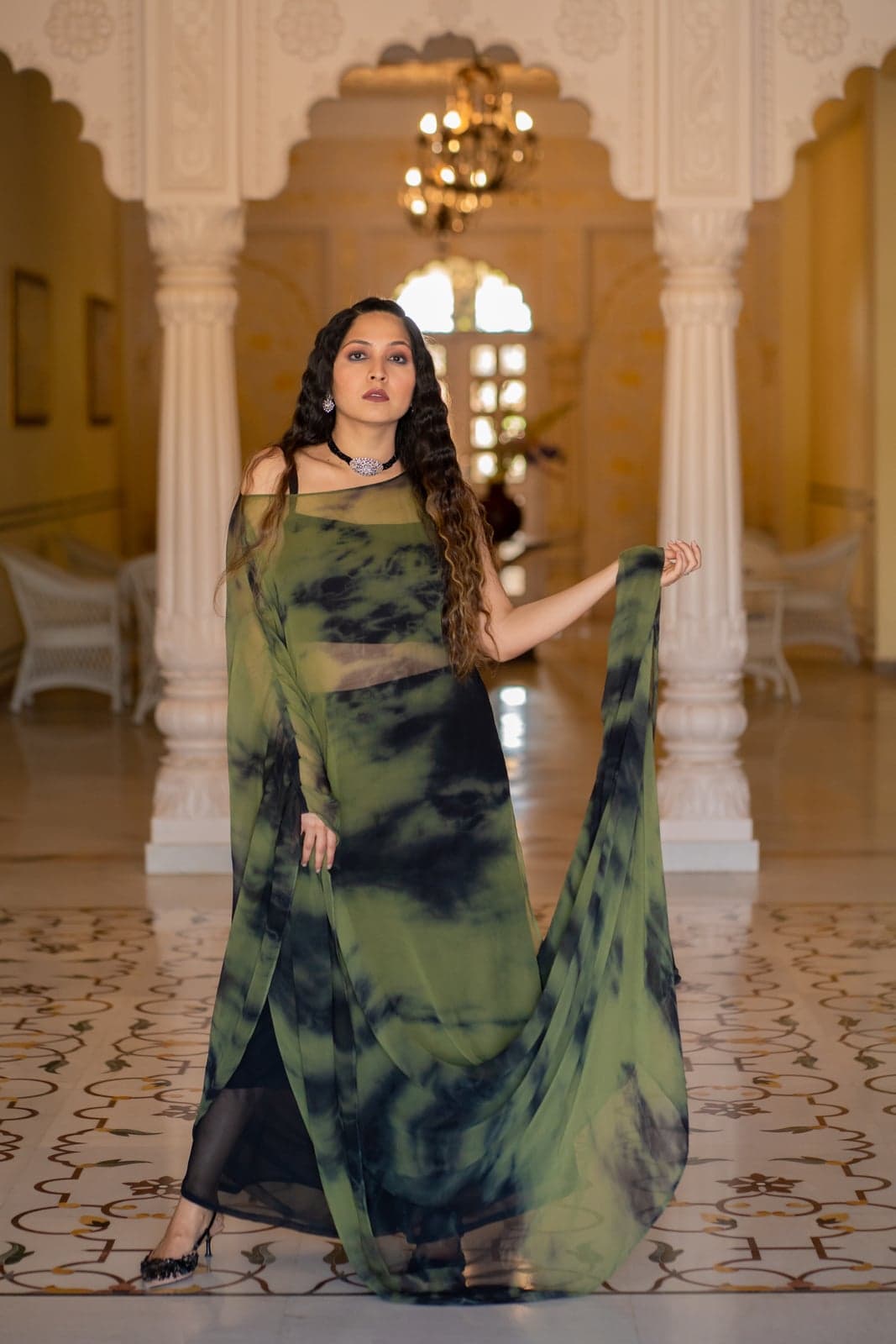
Olive and black tie-dye chiffon kaftan-style sharara with sheer panels and an oxidised silver choker — photographed under the arches of a Jaipur palace hall.
Questions, answered.
- What does the bride usually wear to her sangeet?
- Something she can dance in without thinking about it. Shararas and ghararas are the most requested — the wide leg moves like a skirt but stays put — followed by lighter lehengas with a fitted blouse. Heavy trains and long veils are for the wedding day, not the sangeet.
- How is a sangeet outfit different from a bridal lehenga?
- Weight and freedom. Sangeet pieces carry lighter embroidery, softer fabrics — chiffons, printed silks — and silhouettes that are secure through hours of dancing. They are typically quicker to make and sit at a lower price point than full bridal couture.
- Can you dress my sisters and bridesmaids for the sangeet too?
- Yes — coordinated (never identical) outfits for sisters, bridesmaids, and mothers are a regular part of sangeet commissions. One palette, several silhouettes, each cut to its wearer.
- How far in advance should I order a sangeet outfit?
- Eight to ten weeks is comfortable. If the sangeet outfit is part of a full trousseau commission, it is scheduled alongside the bridal lehenga so everything finishes in the right order.