
Reception Gowns & Saris
Evening silhouettes that hold the light after the ceremony ends.
The reception asks for a different garment than the mandap. The rituals are done; what remains is an evening — a room full of light, a first dance, photographs that will outlast everyone's memory of the menu. Reception wear at the atelier is built for exactly that hour.
This is where the house's gowns live: mauve columns with sculpted corsages, champagne satin draped like a sari but cut like couture, black sequin sheaths with sleeve-capes that move when you do. For brides who want to stay closer to tradition, we drape reception saris and saree-gowns with embroidered blouses made to measure.
Each piece is commissioned the way everything here is — sketched for you, fitted on you, finished by hand in Jaipur.
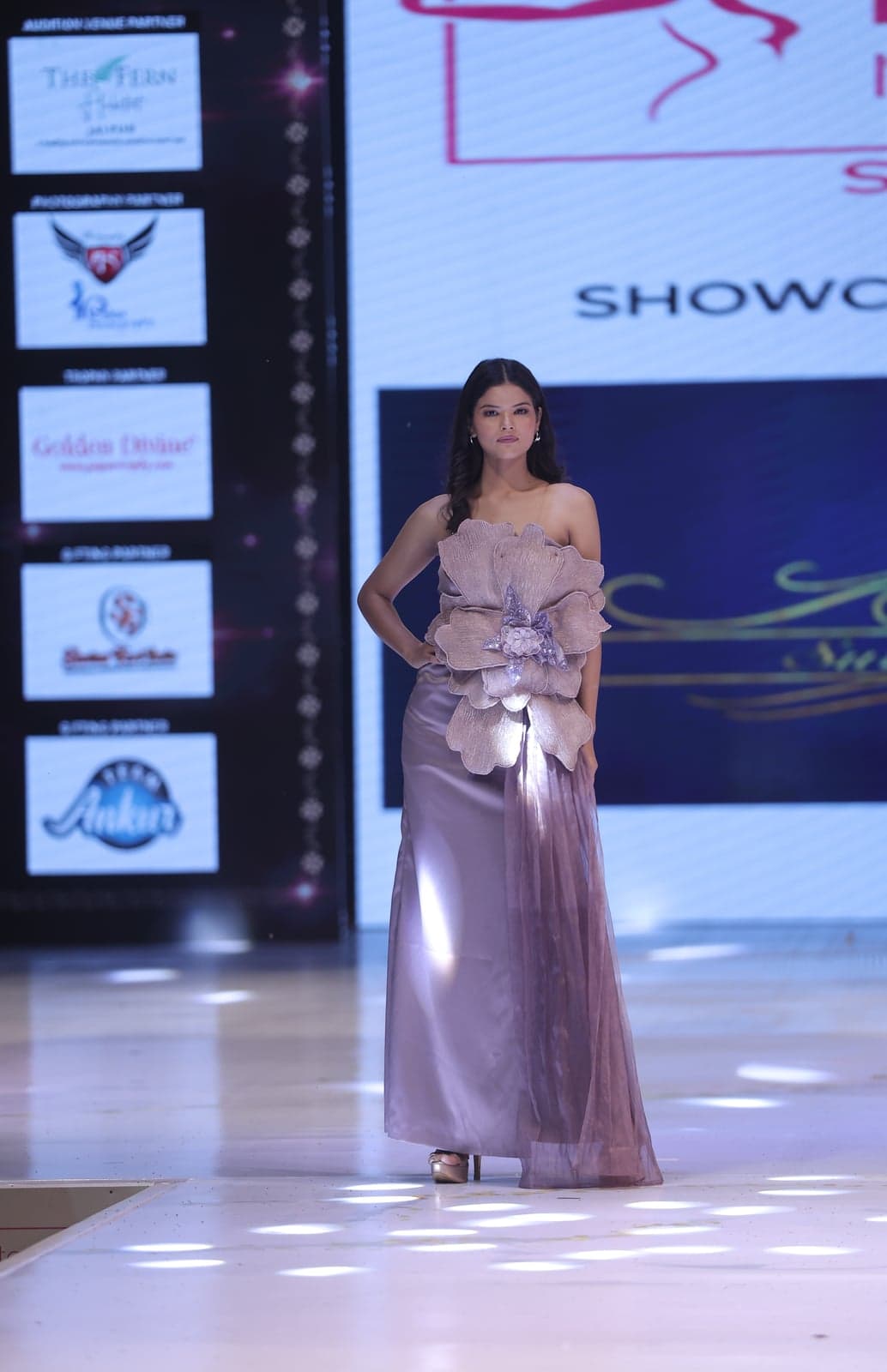
Mauve column gown with a sculpted bronze-petal floral corsage at the bust — Surbhi Sabnani's Showcase showstopper, runway walk under spotlights.
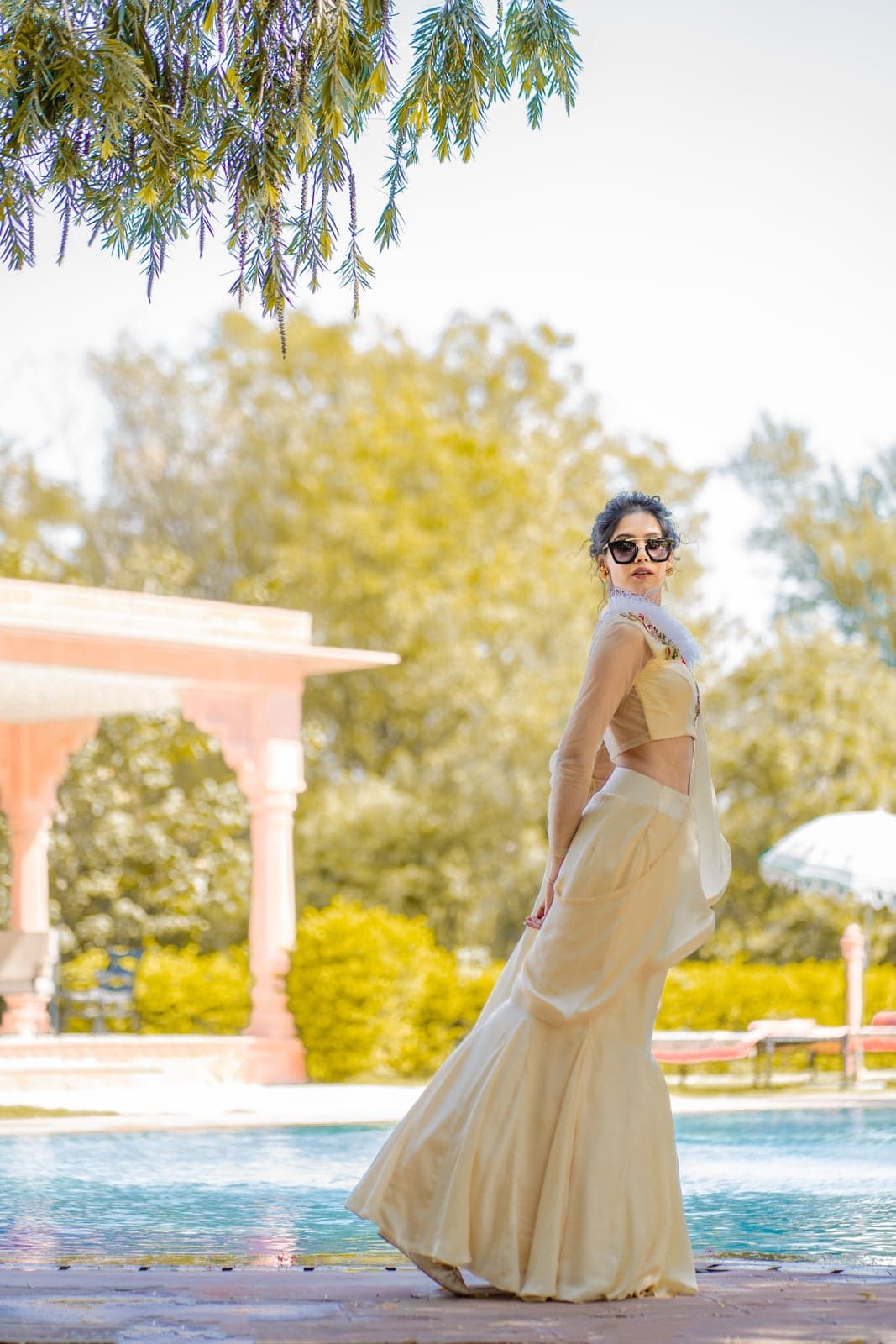
Champagne gold mermaid lehenga with a sheer cape and feathered neckline — fluted satin hem, photographed at the poolside of a Jaipur villa.
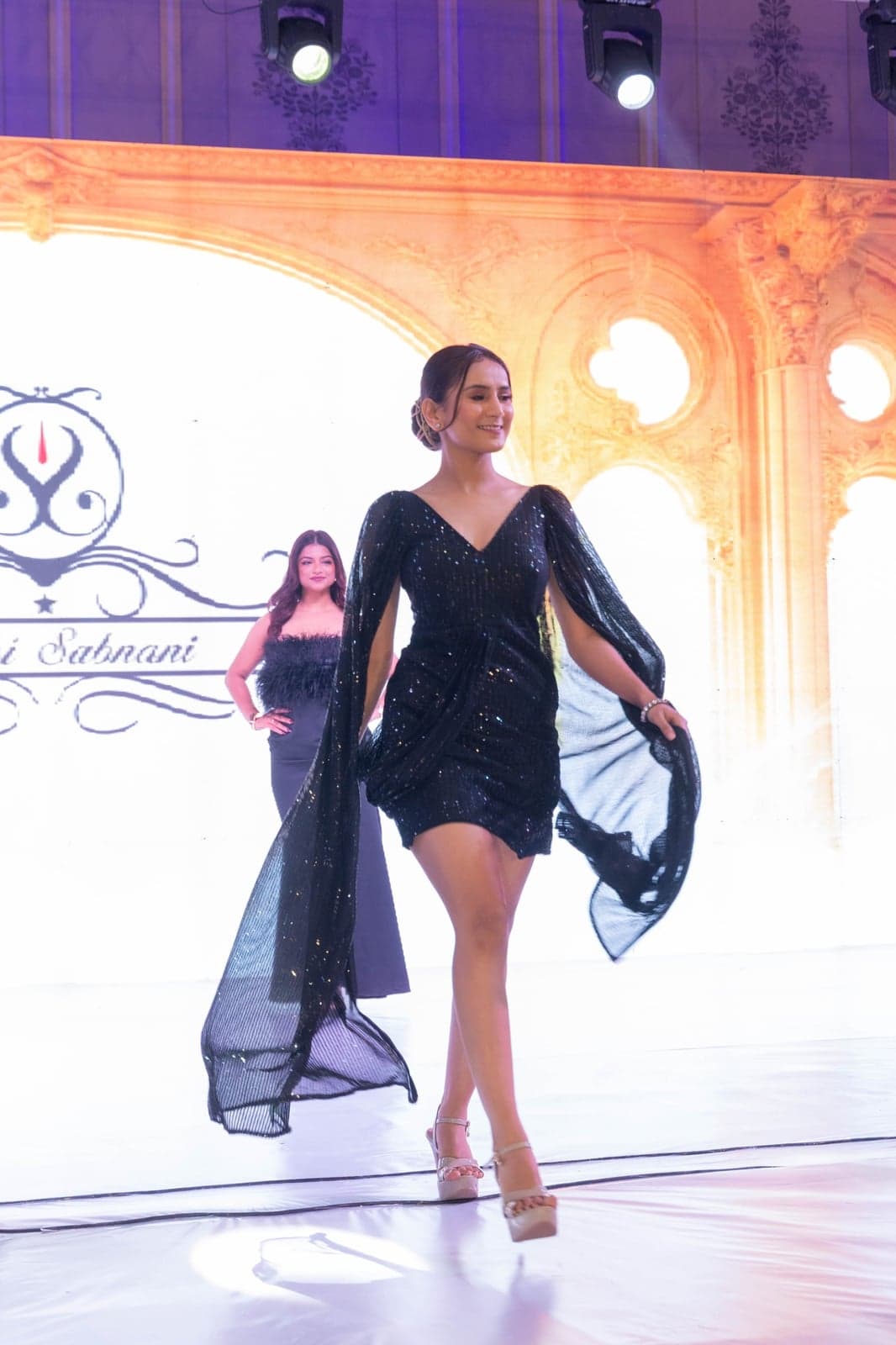
Black sequin sheath dress with a long fluid sleeve-cape and a thigh-high slit — runway portrait beneath crystal chandeliers.
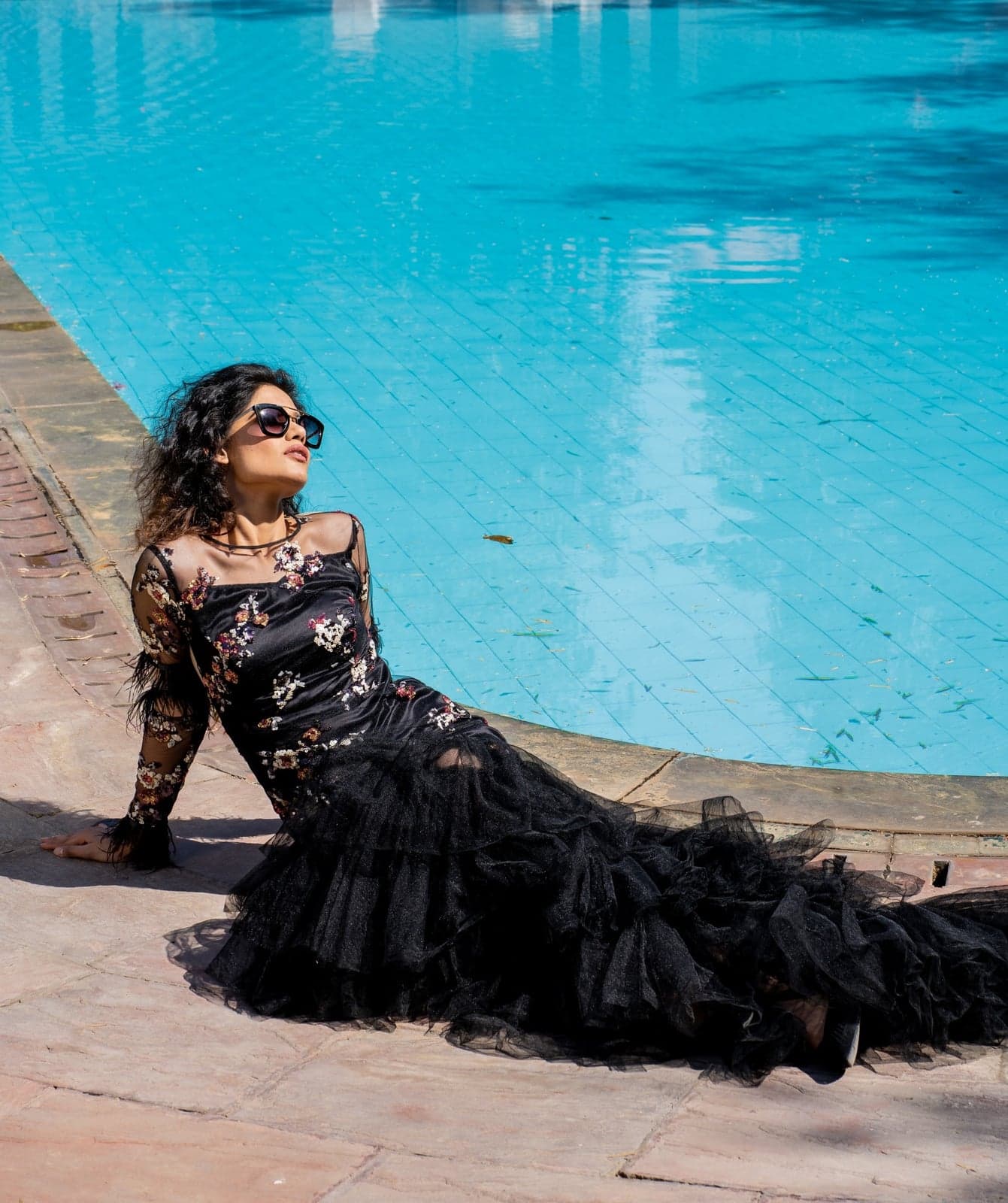
Black floral-embroidered gown with a tiered tulle train — sheer mesh bodice scattered with three-dimensional petalwork, photographed at the pool's edge.
Questions, answered.
- Gown, sari, or saree-gown — how do I choose for a reception?
- It usually comes down to how you want to move and be photographed. A gown gives a clean, continuous line; a sari carries tradition into the evening; a draped saree-gown sits between the two — the drape of a sari with the security and fit of a stitched garment. We talk it through at the consultation.
- Can my reception outfit match or echo my bridal lehenga?
- Yes — many brides commission both together so the embroidery vocabulary, colour story, or motifs carry from the morning into the evening. Commissioning the two as a pair also helps the timeline.
- How long does a custom reception gown take?
- Six to twelve weeks is typical, depending on embellishment. Gowns with dense hand-work — feathered bodices, sequin embroidery, sculpted florals — sit at the longer end.
- Do you make reception outfits for the groom's family or guests?
- We do. Mothers, sisters, and close guests commission evening wear from the atelier regularly — the only rule is that nothing we make for a wedding party ever upstages the bride.